





Santoni Shoes: Craftsmanship you can feel
"Some things are recognized not by their logo, but by how they feel."
By the weight of a shoe in your hand. By the scent of the leather. By the even stitching that no eye needs to search for, yet finds because it is so precise. Santoni is one of those things.
In 1977, Andrea Santoni founded his company in Corridonia, a small town in the Italian region of Marche. Not far from Ancona, in the midst of a landscape renowned for its craftsmanship for centuries. What started small is now a globally respected house with over 400 employees, led by the second generation of the Santoni family.
What has remained: the aspiration. The founder's mission was clearly articulated: not to produce more shoes, but better ones.

Up to 150 steps – many of them by hand
In the expansive production halls spanning over 15,000 square meters, shoes are created that know no shortcuts. Each pair undergoes up to 150 production steps before leaving the premises. Many of these are pure handwork. Not out of nostalgia, but because machines cannot do what a skilled hand can.
The upper is pulled over the last. The sole is stitched using the Goodyear method, which gives the shoe stability and simultaneously makes it repairable. The leather, from European tanneries and vegetable-tanned, has no color yet. That comes later.

Patina as a signature
The dyeing process at Santoni is not just a stage in production. It is a craft in itself. Up to nine layers of color are applied manually, each dried, inspected, refined. What emerges is not a uniform surface. It is a living one. Deeper at the edges, lighter in the middle. Light catches in it.
Santoni calls this "anticatura": an antiquing process that gives each shoe its own story even before it has been worn. No two pairs look exactly alike. This is not a tolerance for error. It is intentional.

A shoe that remembers
Anyone who slips into a pair of Santoni for the first time feels the leather. Still slightly firm, still in dialogue. Over time, it adapts. To the shape of the foot, to the way of walking, to the person who wears it. The shoe becomes more familiar. Softer. More personal.
That's the difference between a shoe that wears out and one that grows.
Santoni shoes are repairable. Resoleable. Passable. A pair that can last for decades, if you let it.
For every context that understands attitude
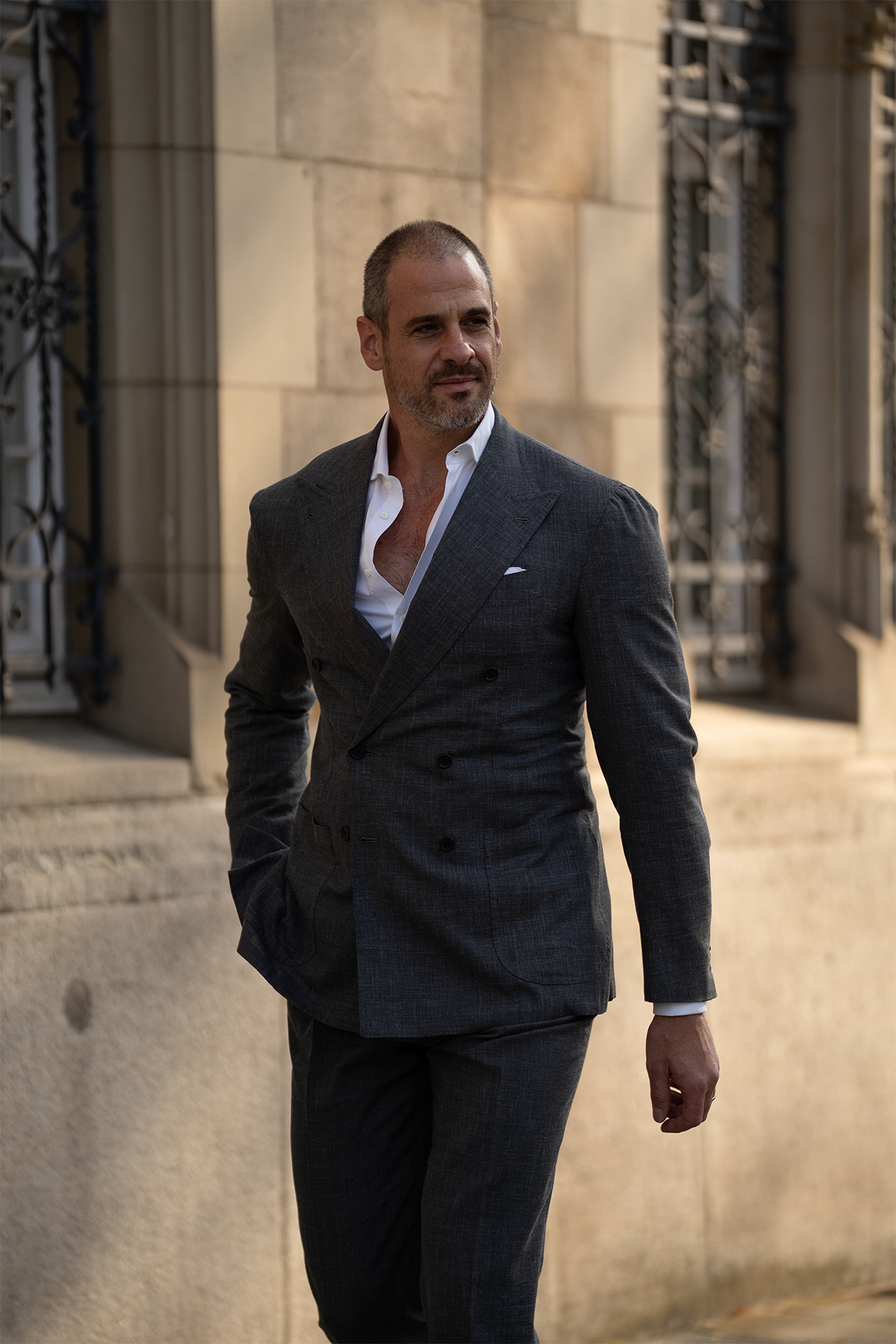
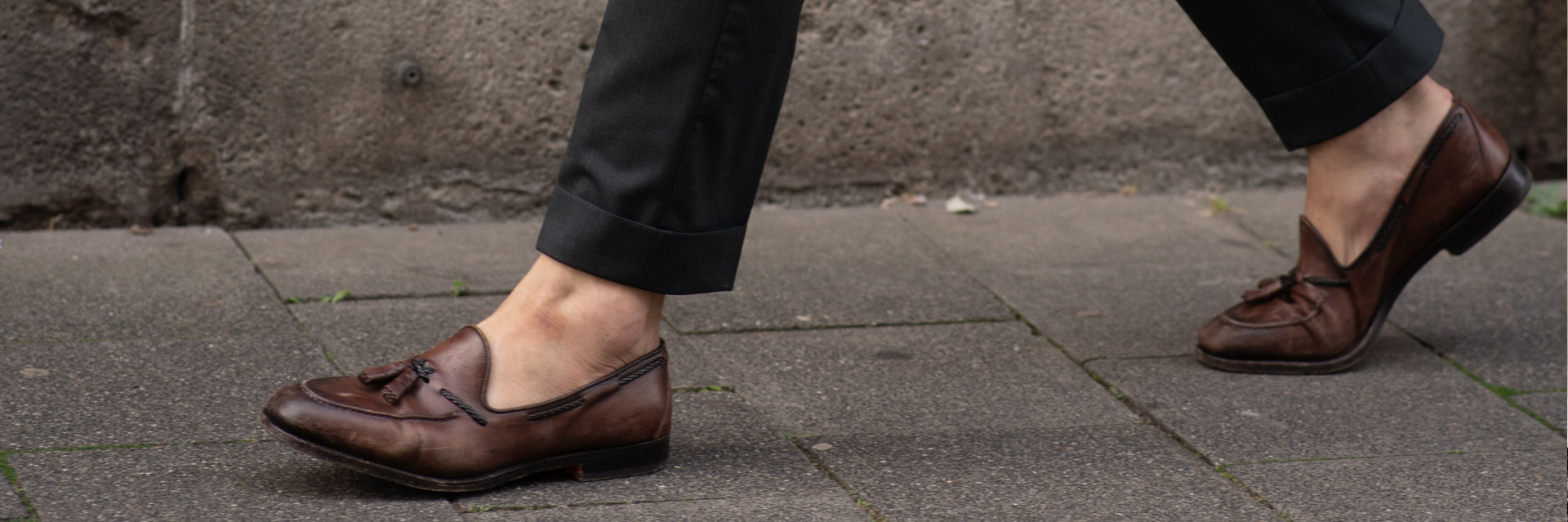
Santoni works where style needs no explanation. With a suit that shows presence effortlessly. With denim that requires quality not to look accidental. The shoe carries, without needing to persuade.
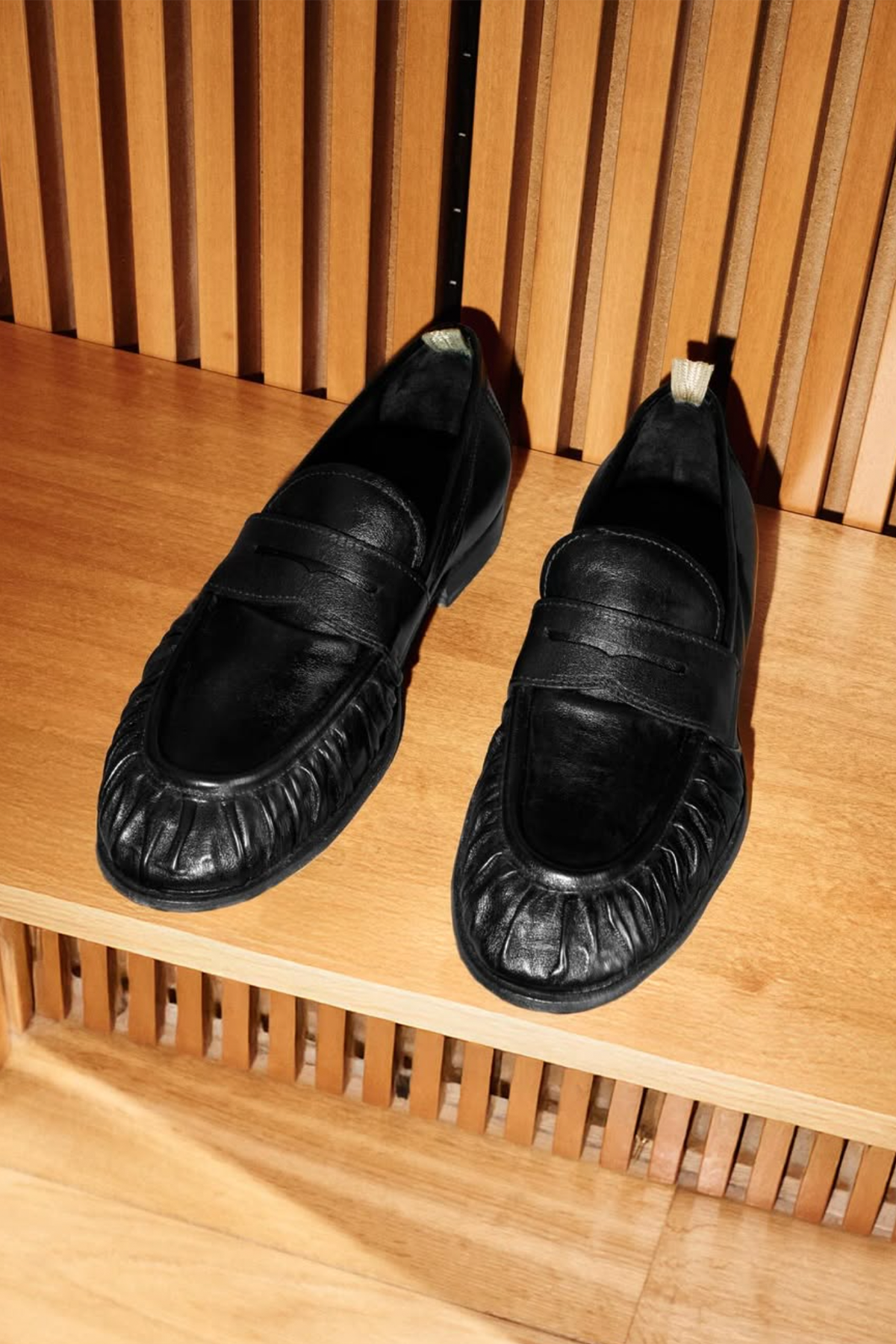
The classic lace-up model. The elegant slipper. The Goodyear-welted Oxford. Santoni thinks in terms of accompaniment, not appearances.
I myself have been wearing Santoni for over two decades, literally in every walk of life. The leather sneaker on the weekend. The sandal for the beach. The Oxford with a suit. The patent version with a tuxedo. There are brands you buy. And those you keep. For me, Santoni belongs to the second category.

Why we carry Santoni – and have since 2005
When I joined C.Wirschke GmbH in 2005, Santoni was one of the first brands I included in our assortment. Not because it was already a loud brand then, but because I felt it wouldn't need to be. Twenty years later, that conviction has been confirmed.
Over the years, we have hosted several events with Santoni. Moments where customers could experience live how a shoe is hand-colored. How a craftsman applies, polishes, and inspects layer after layer of color. It was always the same: once you've watched, you see shoes with different eyes.
At C.Wirschke, for over 80 years, we have developed a knack for what endures. What lies behind a product. Santoni meets this standard. In its origin, in its attitude, in its craftsmanship. We don't carry brands because they are loud. We carry them because they quietly deliver on their promises.
Santoni is one such brand.
—
Clemens Wirschke
If you want to know more, or simply feel, you can find the Santoni range in our shop. An invitation, not a demand.

more from the journal
Mother's Day Gift Guide: My Personal Favorite Ideas by C. Wirschke
Patricia shares her personal favorite ideas for Mother's Day gifts & outfits.
Read more
Summer in Düsseldorf: What we're wearing right now
Patricia and Clemens Wirschke on fabrics, cuts, and the small decisions that make a summer.
Read more